MediFlex Bell: a nurse call bell that adapts to the patient
About 5.4 million people in the US live with paralysis or limited mobility, yet 43% of nurse call systems still rely on a standard push-button. Hospitals buy a separate specialty cord for each patient's needs. We designed one modular bell that adapts to each patient instead.
Objective
Design and prototype a specialty call bell that reliably connects nurses with limited-mobility patients, is configurable and easy to use, and plugs into a facility's existing nurse call system.
Design
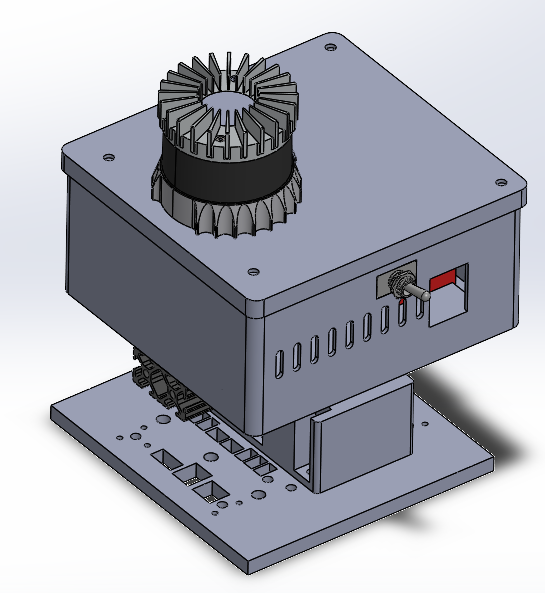
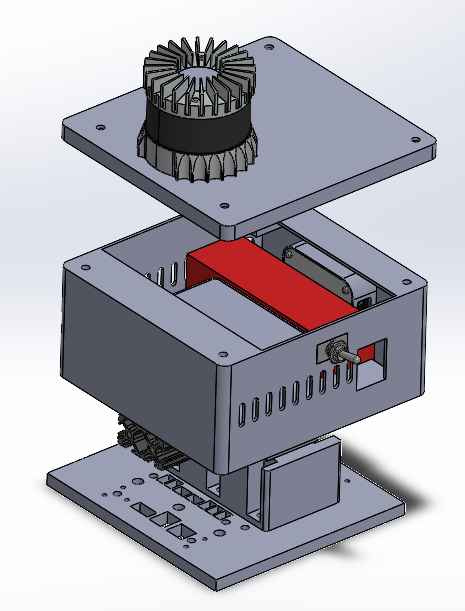
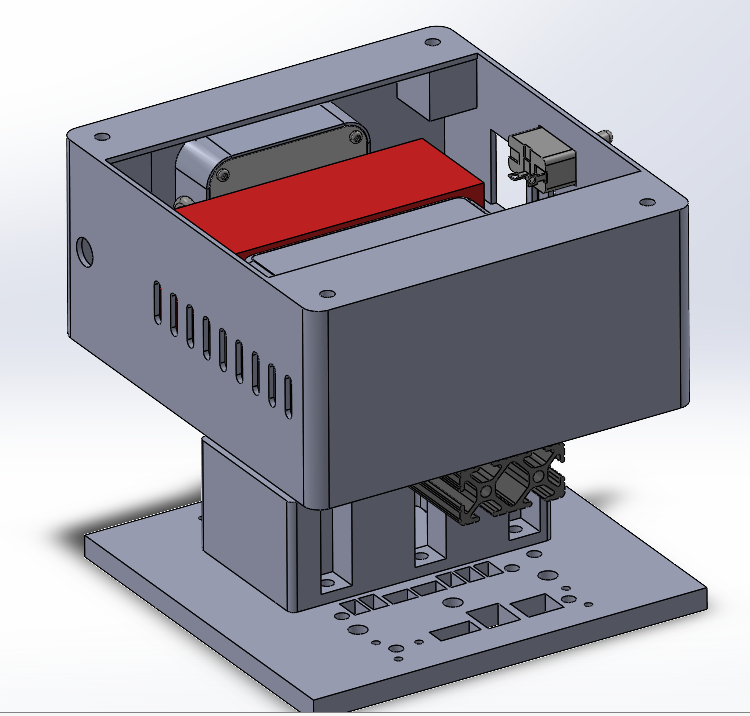
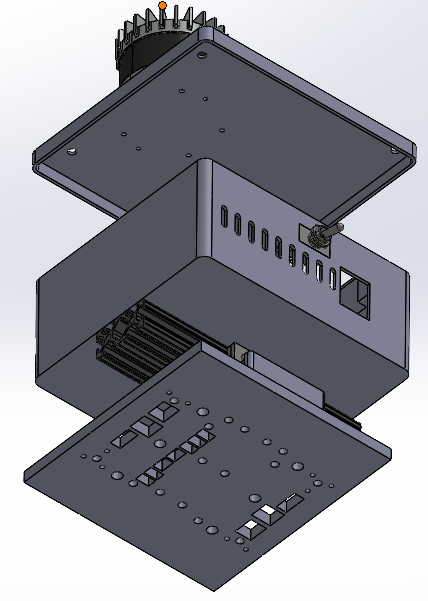
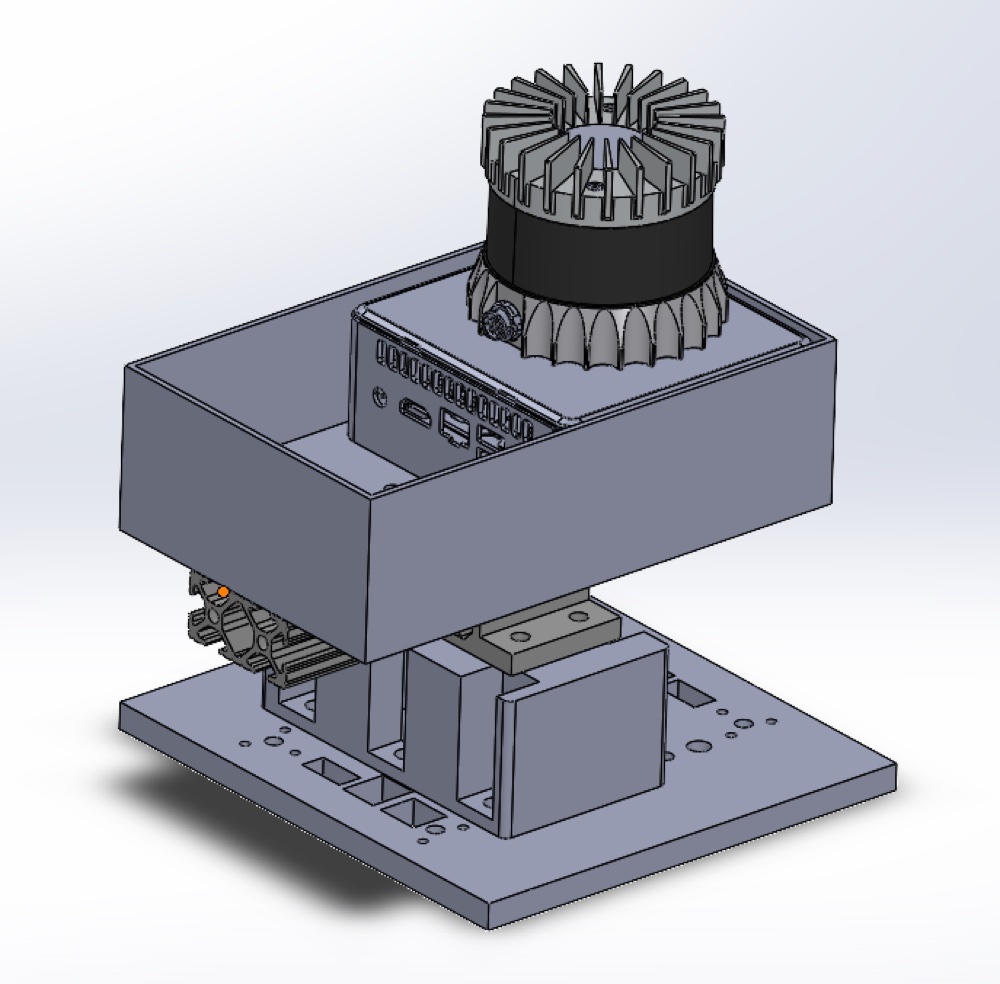
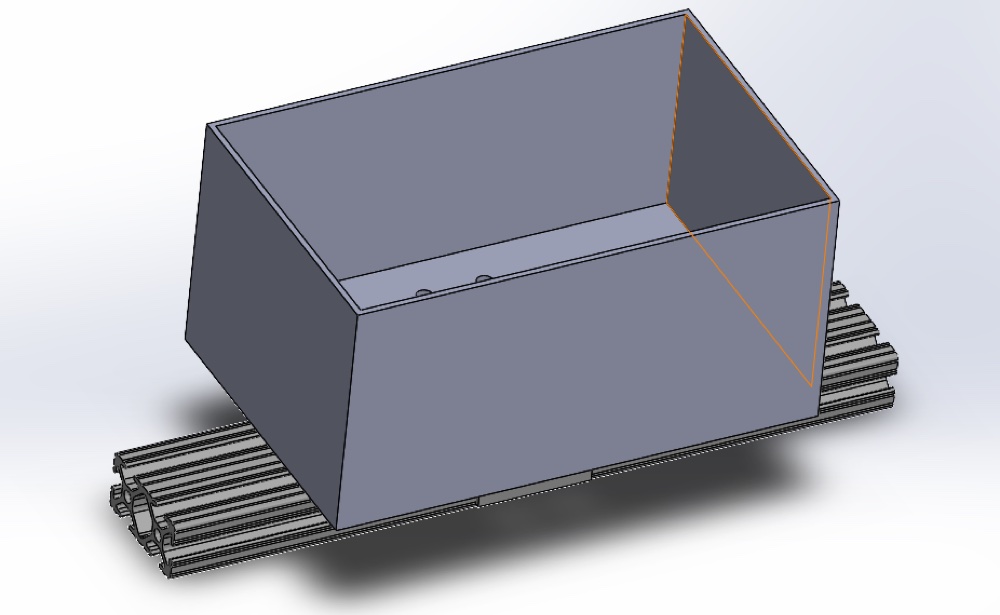
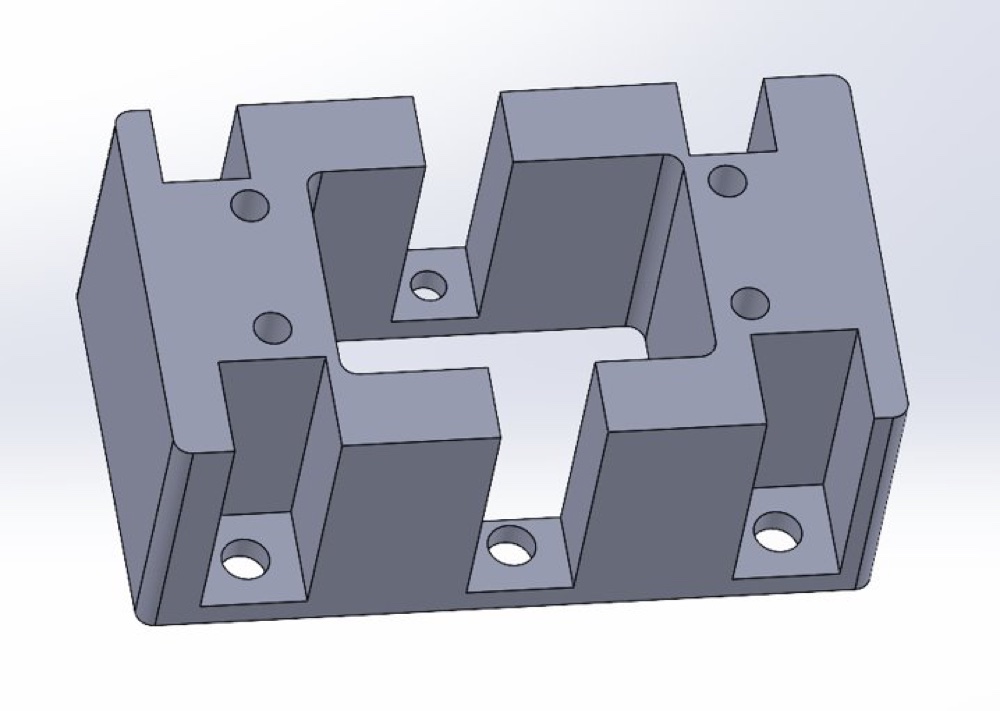
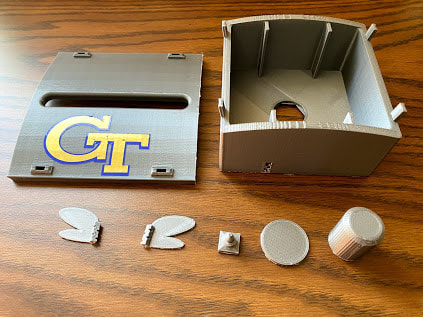
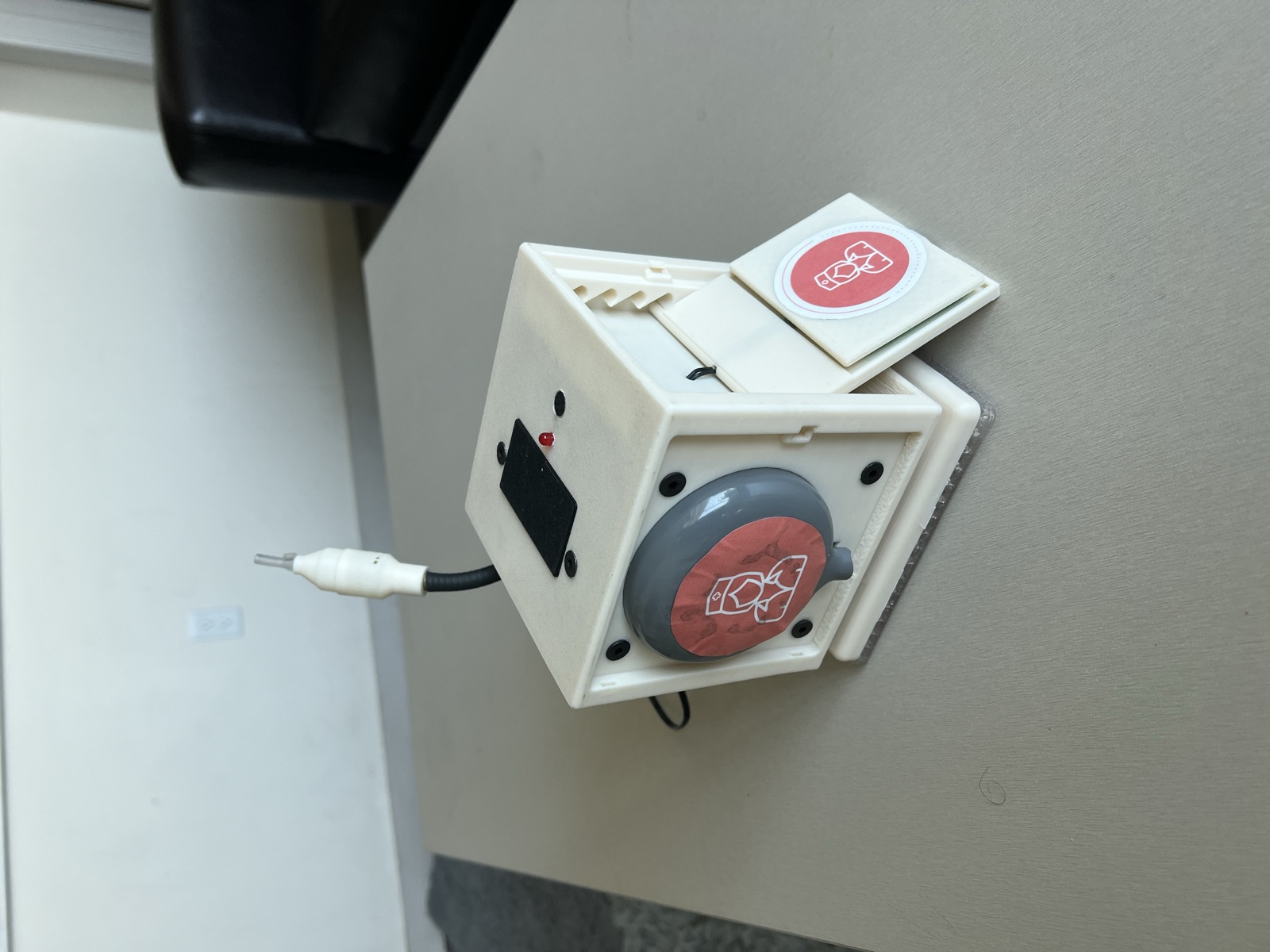
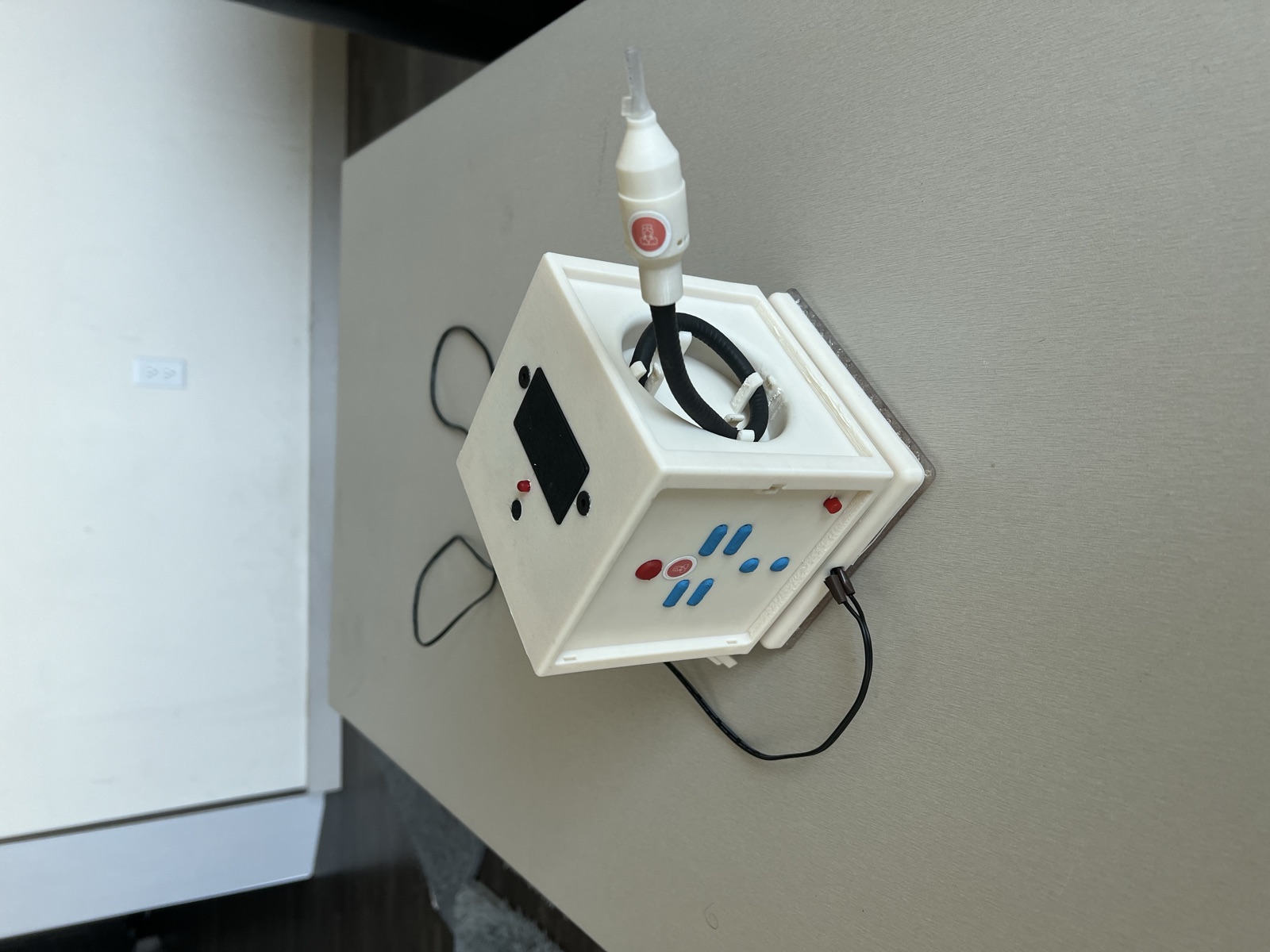
The enclosure is about 5 × 5 inches, with removable casings, a rotating turntable base that stays connected to power as the bell is reconfigured, a built-in power cord path, and speaker and microphone outlets for two-way talk. Inside, a snap-fit base plate holds the PCB, with storage space for the gooseneck and electronics.
A custom two-layer PCB links the force and pneumatic sensors, microphone, and speaker to a microcontroller over I²C.
Material selection
In Ansys Granta EduPack, I built material indices to keep mass and cost low while staying tough, water-resistant, and latex-free. I compared PC, PET, and ABS, and chose ABS for the frame, casings, and turntable because it's cheap to make and holds up to hospital disinfectants. I picked silicone elastomer for the soft buttons and FR-4 for the PCB, which is flame-retardant and about 2.5× cheaper than the alternatives.
My contributions
- Designed and iterated the modular assembly in CAD, integrating the gooseneck, turntable, and sensor housings
- Ran material selection and FEA with mesh-convergence studies
- Wrote the FMEA risk assessment and mapped the design to medical device standards
Structural analysis (FEA)
| Component | Load case | Result |
|---|---|---|
| Incline pad | 0.5 N repeated | FoS 555 · 3.89×10¹² cycles |
| Breath-call mouthpiece | 1 psi internal | FoS 247 · 4.26×10¹¹ cycles |
| Casing | 10 N axial | FoS 464 |
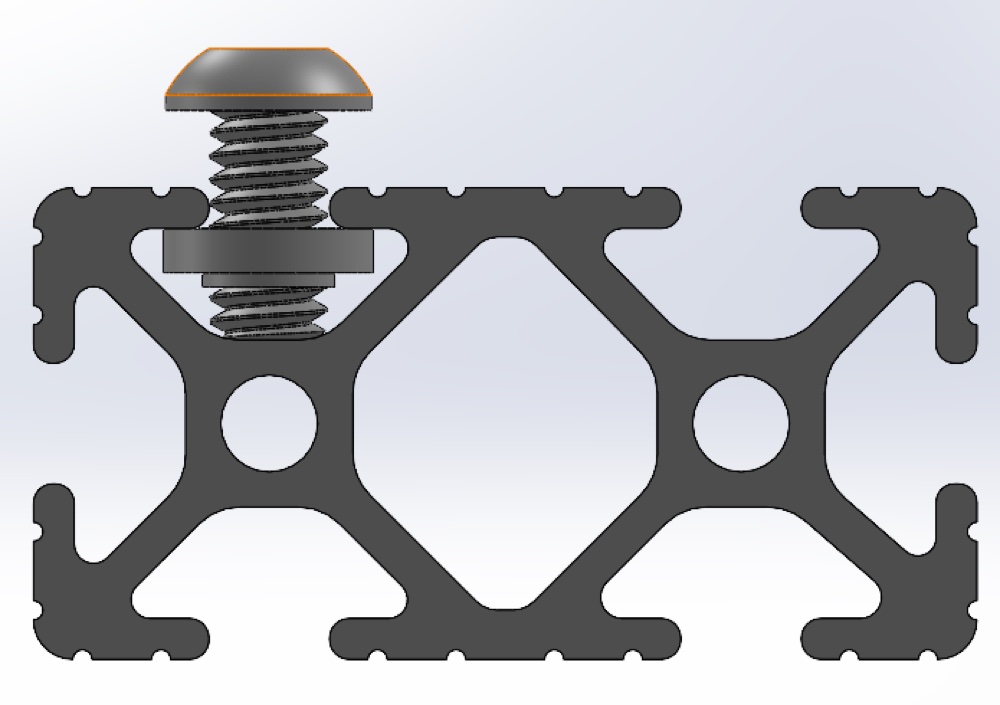
| Bell frame | 250–400 N compression | Yields at 380–400 N |
| Gooseneck (steel) | Axial pull | Yields at 80 N |
Top FMEA risks
| Failure mode | S | O | D | RPN |
|---|---|---|---|---|
| Incline plane deformation | 8 | 5 | 4 | 160 |
| Bell frame deformation | 9 | 5 | 3 | 135 |
| Mouthpiece lifespan | 7 | 4 | 4 | 112 |
| Soft button lifespan | 7 | 4 | 4 | 112 |
Standards addressed
- IEC 60601-1 — safety of electrical medical devices (stress analysis on the frame and mechanisms)
- UL 1069 — reliability of nurse call systems
- AAMI HE75 — usability and product life cycle
- IEC 80601-2-49 — patient monitoring devices
- NFPA 99 — fire and electrical safety (PCB and power supply placement)